Antiqued Villa Interior
Pattern Design, Material Strategy, Spatial Planning
Florence, Italy
Fall, 2025
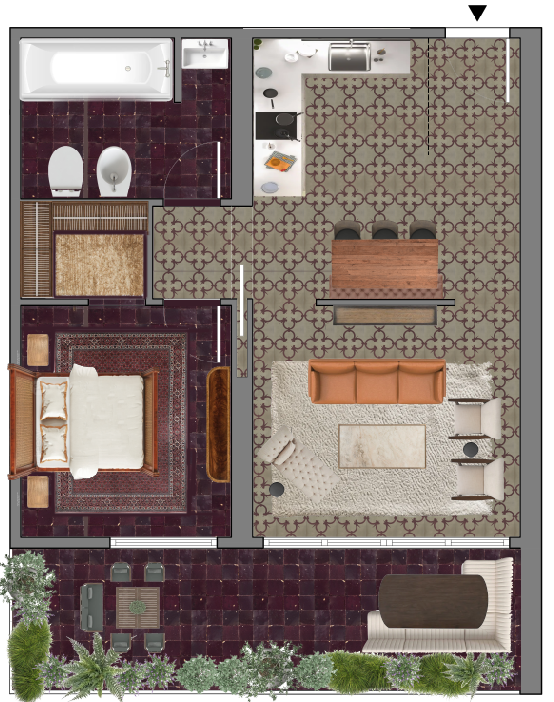
This academic studio project explored the translation of a custom-designed surface pattern into a fully realized interior environment. The scope included developing an original pattern in Photoshop and reworking a provided floor plan to design the full spatial layout of the home.
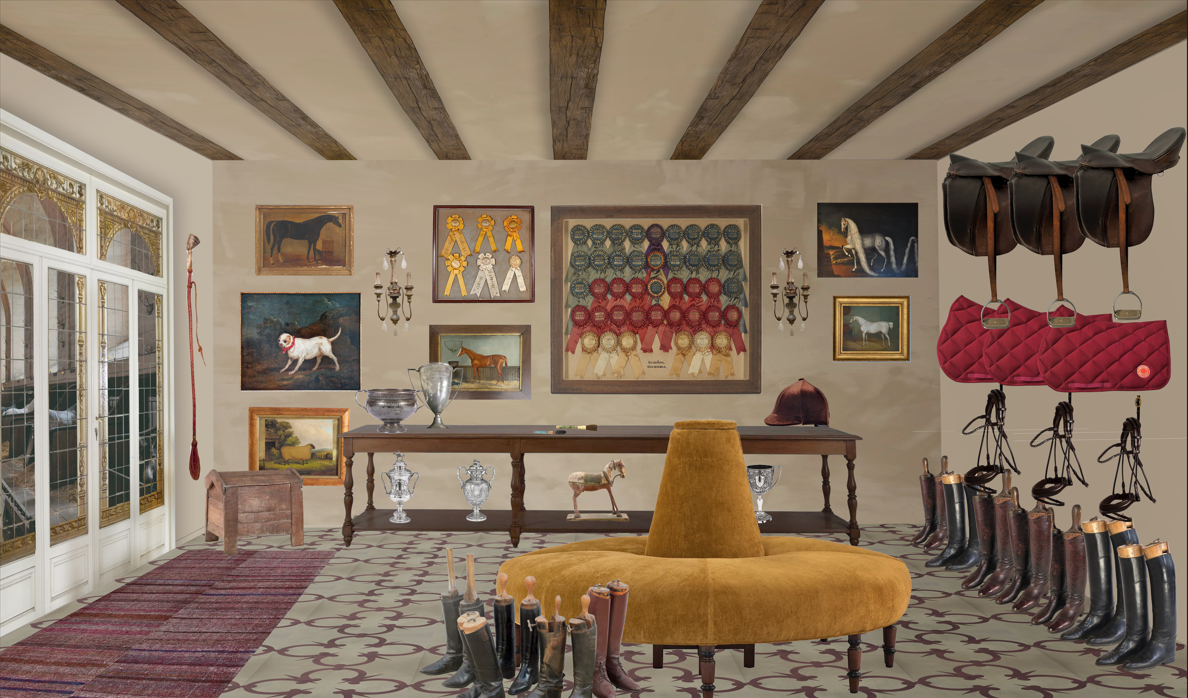
Initial studies applied the pattern within a luxury equestrian tack room. Through reflection, the project shifted toward a residential interior, where it felt more appropriate and could be integrated with greater restraint. The final design focused on circulation, thresholds, and the strategic use of partitions to organize flow, define rooms, and create a sense of progression across interior and exterior spaces.
Project Details
-
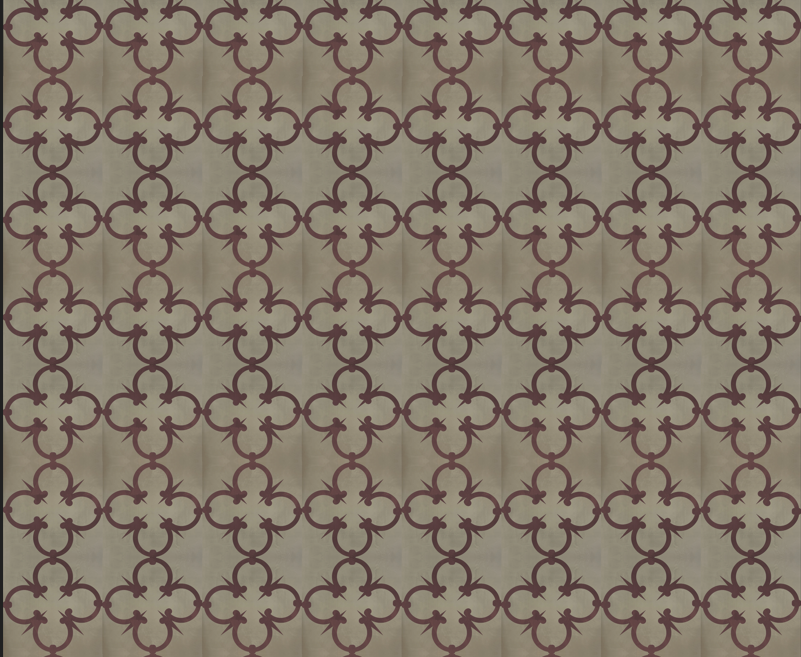
Drew pattern inspiration from an ornamental iron gate in Piazza del Duomo, translating historic Italian geometry into a contemporary surface
Explored the contrast between soft, undulating forms and sharp, spear-like elements to create tension and depth
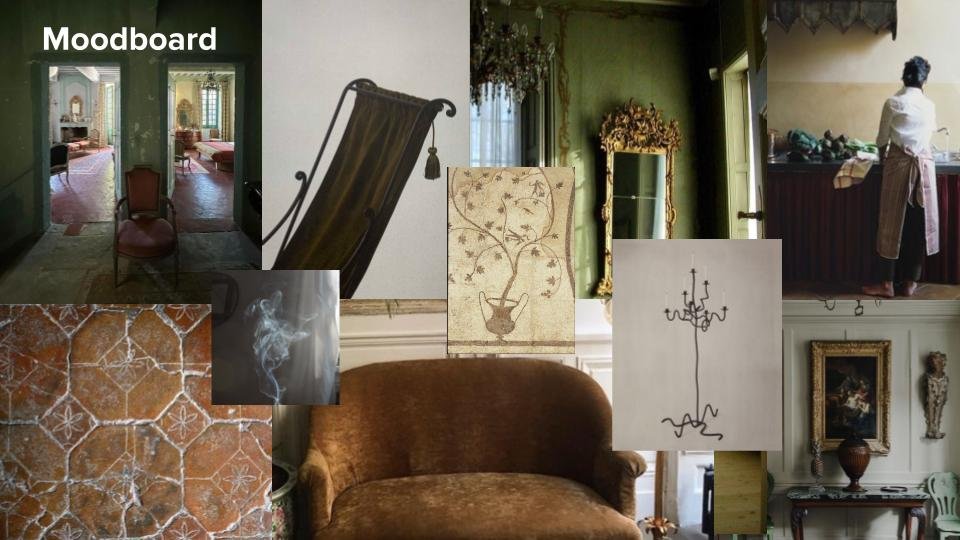
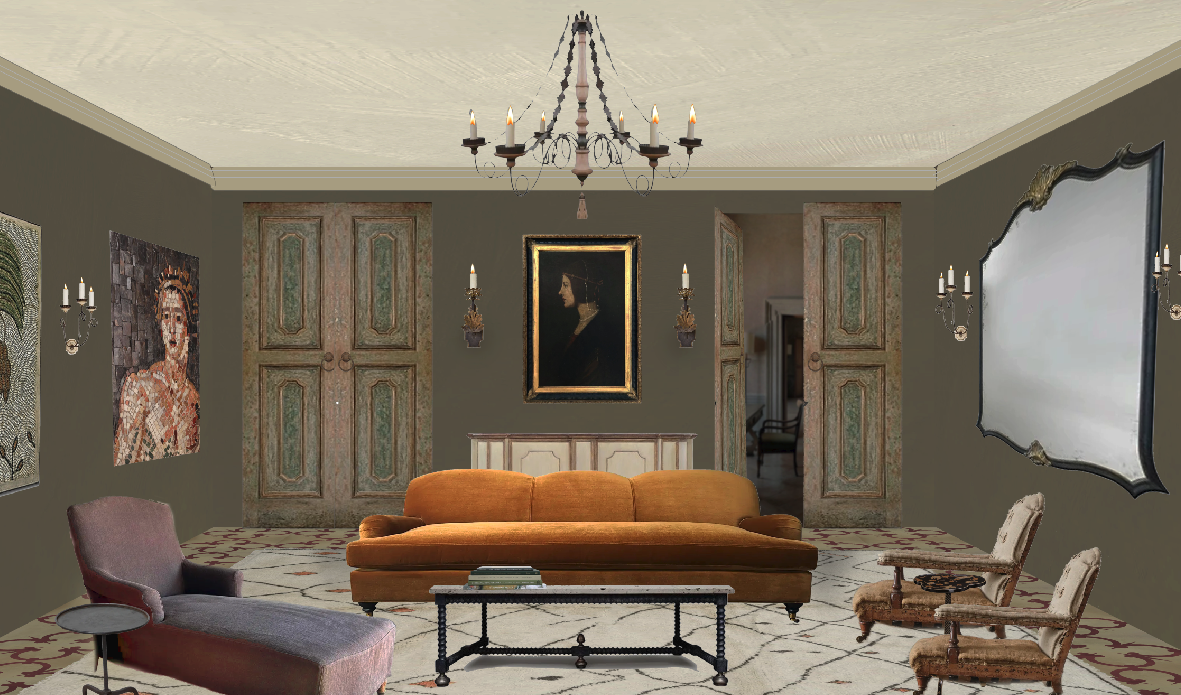
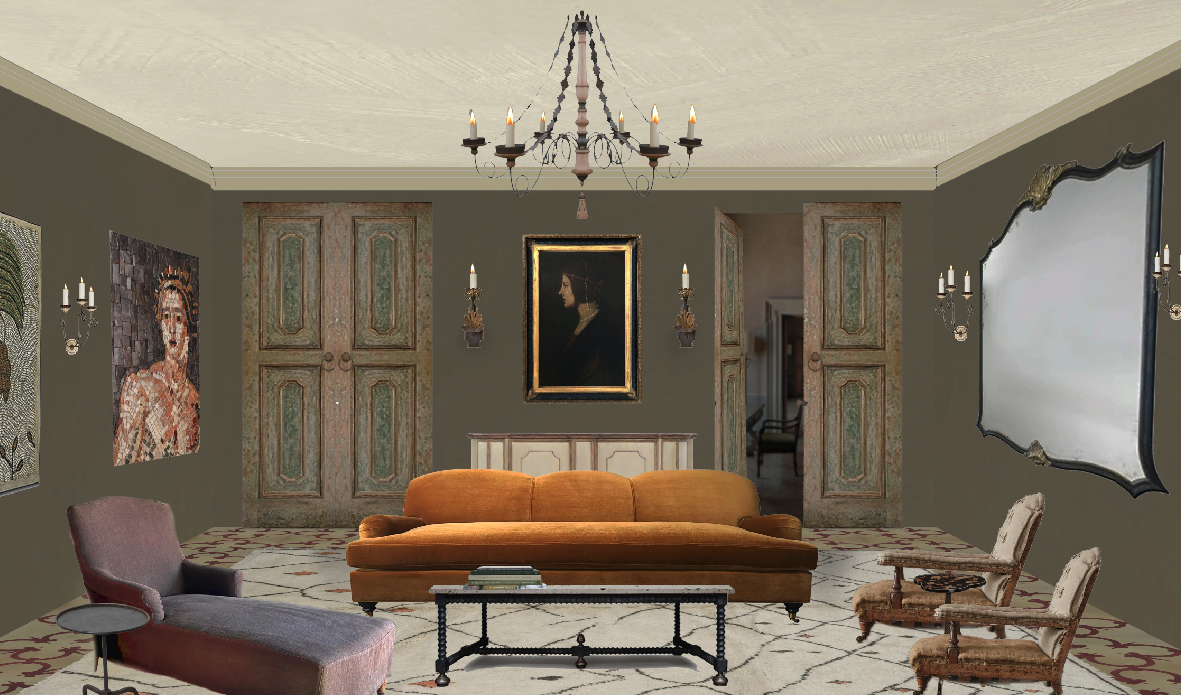
Positioned the project within the context of an antiqued Italian villa, emphasizing wear, age, and livability over ornament
Treated pattern as a spatial driver, informing layout, thresholds, and rhythm rather than acting as decoration
-
Developed a pattern that felt antiqued, nuanced, and slightly foreboding, rooted in historic reference rather than nostalgia
Applied a restrained, earthy palette inspired by Portola paint swatches to introduce texture and depth
Designed interiors that felt romantic, grounded, and candlelit, balancing beauty with daily use
Prioritized clarity of circulation and spatial grounding, allowing rooms to unfold gradually rather than abruptly
-
Created a custom tile pattern in dusty green and oxblood, referencing traditional Italian terracotta with added graphic complexity
Introduced architectural partitions to slow entry, define rooms, and create moments of compression and release
Anchored the kitchen with a wall-integrated dining table, enabling balanced circulation on either side
Organized the plan to allow multiple paths of movement, connecting entry, living, kitchen, and private spaces intuitively
Separated bathroom sink and toilet zones to enhance privacy and comfort
Designed the patio as two distinct zones, one private and intimate, the other social and open, with planting used to provide enclosure and draw the exterior inward